This week, I gave my first-year security students a classroom challenge involving encryption, access control, and a suspiciously endangered grade file. They competed, searched for patterns, and tried to understand what the other teams were doing. The activity led us into a conversation about cryptography and the people who broke secret messages long before modern computers existed.
That brought me back to Liza Mundy’s fascinating book, Code Girls: The Untold Story of the American Women Code Breakers of World War II.
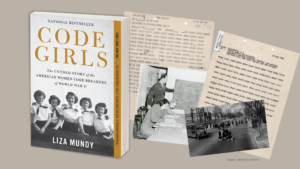
The Women Behind the Secret Messages
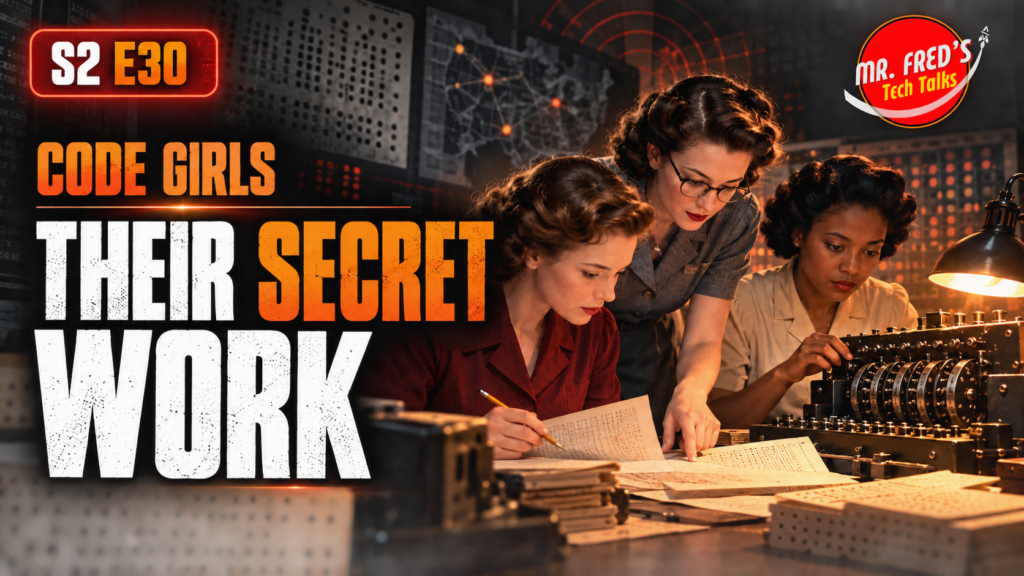
During World War II, more than 10,000 American women were recruited to help intercept and decipher German and Japanese communications. Many were young teachers or recent college graduates selected for their abilities in mathematics, languages, pattern recognition, and problem-solving. They worked with intercepted messages, handwritten charts, punched cards, and mechanical equipment.
There was no search engine, online tutorial, or “ask AI to explain this cipher” button. Their work required patience, teamwork, and a remarkable amount of persistence. In this episode, I introduce Dorothy “Dot” Braden, a Virginia schoolteacher whose ability to recognize patterns helped analysts understand Japanese military communications.
I also discuss Genevieve Grotjan Feinstein, the mathematician whose breakthrough helped American cryptanalysts solve the Japanese diplomatic encryption system known as PURPLE. Their work contributed to military intelligence and helped save lives, but many of these women remained silent about what they had done for decades.
What Codebreaking Can Teach Us
When we hear the word “code” today, we usually think about computer programming. The Code Girls were working with another kind of code. Their challenge was to uncover the rules used to transform an understandable message into something unreadable. This process is known as cryptanalysis. The tools have changed, but the mindset remains familiar. Coding, cybersecurity, troubleshooting, and codebreaking all require us to look for patterns, test ideas, learn from mistakes, and keep working when the answer is not immediately obvious.
Sometimes one small clue can unlock the entire problem.
Mr. Fred’s Tech Challenge
You can experiment with basic encryption using a Caesar cipher.
Write the alphabet across the top of a page. Underneath it, write another alphabet beginning with the letter D. Replace each letter in your message with the letter directly beneath it.
For example:
CAT becomes FDW
Give the encrypted message to someone else and see whether they can discover the pattern and decode it.
This is a fun introduction to cryptography, but it should not be used to protect passwords or private information. Caesar had a pretty good run, but cybersecurity has moved on.
Keep Exploring
Read my original review of Liza Mundy’s book:
You can also explore the history through the National Archives and learn more about Genevieve Grotjan Feinstein through the National Security Agency.
Discover the remarkable women behind these secret messages and how their work connects to the encryption and cybersecurity challenges we face today.
Their work may have been secret, but their story deserves to be remembered.
Keep playing. Keep tinkering. Keep exploring.
Mr. Fred