What I’m Seeing From the Other Side of the Classroom
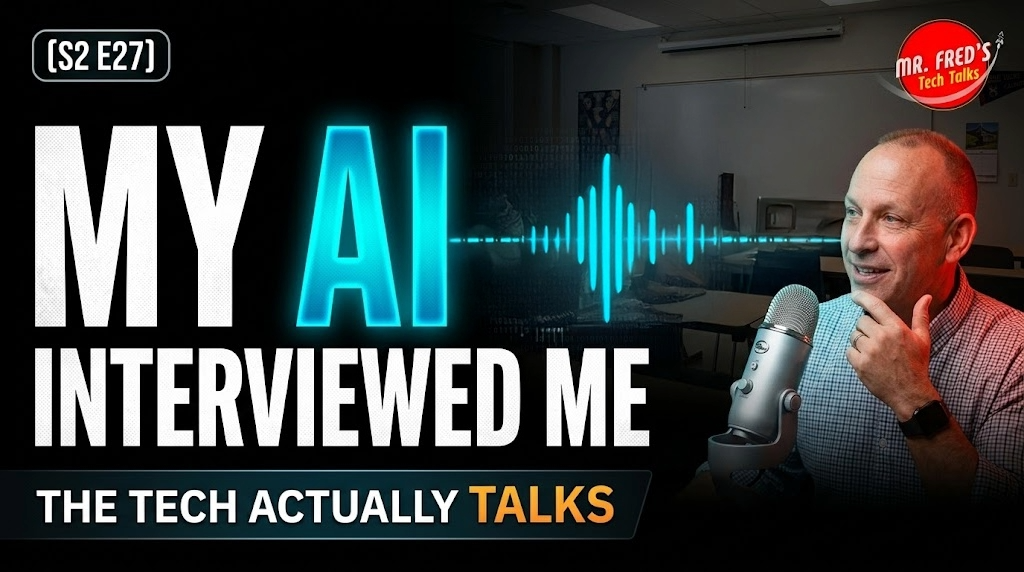
What happens when the technology on Mr. Fred’s Tech Talks actually gets to do some of the talking?
For this episode, I tried something different. Instead of sitting down with a traditional guest, I handed the questions over to Milo, the name I’ve given the AI assistant I use inside ChatGPT. Our topic? My first week back in the college classroom. And although AI may have been asking the questions, our conversation quickly became less about technology and much more about people, learning, curiosity, and some of the things professors see that students and parents may never realize.
Something Felt Different This Year
During one of my first-year classes, I noticed students talking with each other before class. Nothing unusual there. Then many of those same students walked into another class I teach and started sitting together, talking and laughing. I assumed they already knew each other.
They didn’t.
They had begun connecting during those first few days of college. That may sound like a small thing, but after watching students struggle socially during and immediately after the pandemic, I walked out of that classroom smiling. That connection is part of what college is supposed to be about.
Two Words: “Show Me”
Milo asked what parents and teachers can do to encourage learning without immediately jumping in with answers. One phrase I keep coming back to is:
Show me.
Instead of only asking, “Did you finish it?” or “What answer did you get?”, try asking:
“Show me how you did that.”
That simple question shifts attention from the finished product to the thinking behind it. That becomes especially important with AI. A student can produce an impressive answer very quickly now. The more interesting question may be whether they understand how they arrived there.
What Professors Think About After Class
One of my favorite questions Milo asked was something people outside education may not think about:
What goes through a professor’s mind after the classroom door closes?
For me, one question comes up regularly:
Did I land that class today?
Did the idea connect? Did I explain it well? Did I get as far as I wanted? Did the students leave feeling like they were moving forward? Sometimes the answer is yes. Sometimes it is, “Well…we’re going to try that differently next time.” And that’s okay. Teachers make mistakes. We experiment. We reset. We try again. Letting students occasionally see that process may teach a lesson that never appears anywhere on the syllabus.
AI Can Help Us Create More Human Learning
I don’t want AI replacing the learning process. But if educators can use it to develop better questions, create more engaging activities, explore new approaches, or give themselves more room to coach and mentor students, I think there is tremendous potential there. Technology should help create opportunities for learning. It shouldn’t become a shortcut around learning.
This Week’s Tech Challenge: Ask About Curiosity
Think about someone who is starting something new. Maybe it is a child beginning another school year, a college student, someone beginning a new job, or maybe it’s you.
Ask them: “What are you curious about right now?”
Then listen. If you are the person starting something new, find one thing you don’t understand yet and explore it. Ask someone. Try something. Look it up. Experiment. Use AI to help you understand it better, but don’t simply ask AI to do it for you.
Tinker with it. You don’t have to know where that curiosity will lead. That’s kind of the point.
Listen to Mr. Fred’s Tech Talks
After all these years and all those first days of school, I still get excited about the beginning of another semester. The student who walks into a classroom during the first week won’t necessarily be the same person walking out at the end. That journey is still one of my favorite parts of education.
Listen to S2 E27 of Mr. Fred’s Tech Talks wherever you get your podcasts, and if you enjoy the conversation, follow or subscribe so you don’t miss the next one.
And as always:
Keep playing. Keep tinkering. Keep exploring. And most importantly, keep asking questions.